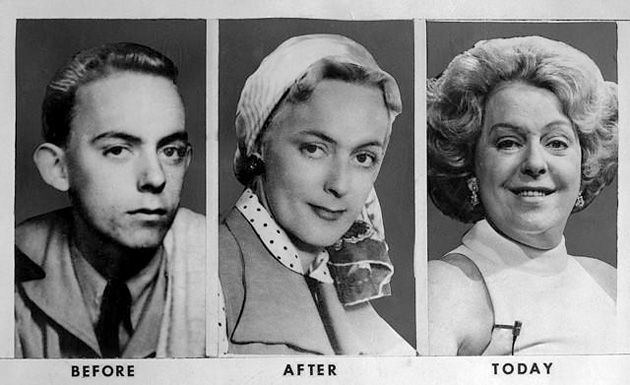
15 years ago, very few people knew much or had formed an opinion about transsexuals. Aside from appearances on lurid talk shows, cases like that of tennis player Renée Richards, or the disclosures of minor celebrities like Chaz Bono, transsexualism was simply not a subject that most people had any cause to consider. After the first wave of high-profile transitions in the mid-20th century, when the process was touted as a feat of modern science, transsexual people largely faded into the background of everyday life.
Today, things are obviously quite different. Transsexualism has become one of the major political battlegrounds of the culture wars, celebrities are publicly out as trans, and “transvestigating” politicians and actors is a pastime of some of our keenest minds. The average person is more aware of the concept of transsexual people than they were in 2010, and this awareness has not been accompanied by support. A study last year found that the population of the UK have become more hostile towards transsexuals broadly over the last two and a half years. Even the majority of those with trans friends or family members believe that youth should not be allowed to take puberty-blocking medication and that it should remain just as difficult to change one’s legal sex.
For years, the common wisdom with regards to minority politics has been that visibility promotes tolerance. If anything, though, it’s seemed to do the inverse when it comes to transsexual people. In many ways, it is more difficult to medically and socially transition today than it was 10 or 15 years ago. How did we get here? And how can we get out?
1. The Marriage Issue
In 2004, support for gay marriage sat at 31% in the US. Fifteen years later, the equation had flipped and only 31% of Americans opposed it. Support for gay marriage has remained around the same level over the past six years, representing an incredible, enduring change in public opinion.
For many, marriage was the ultimate goal of the gay rights movement, which had supplanted the earlier gay liberation movement. Once it was attained, there were no more battles to be fought — acceptance had been unequivocally won for gay and lesbian people, and everyone else could prosecute their own struggles. In fact, the rift between incrementalist gay rights advocates and transsexuals seeking legal protections began even before mass support for gay marriage.
The Employment Non-Discrimination Act (ENDA), a piece of legislation that would prohibit workplace discrimination on the basis of sexuality, was introduced into Congress repeatedly throughout the 1990s and 2000s. In 2007, “gender identity” was added to a version of the bill, but after it died in committee, sponsors pushed for a version without mention of transsexuality. The Human Rights Campaign nonetheless supported the bill, signalling a willingness to throw transsexuals under the bus. Nonetheless, that version of the bill, like its previous iteration, failed to pass.
With gay marriage — the centerpiece of the gay rights movement — a mostly settled question, transsexuals were increasingly left out in the cold. It’s not entirely surprising, then, that some gays and lesbians today want to make explicit what has been implicit in the gay rights movement for decades by “dropping the T” and formally cutting off transsexuals from the LGBT movement.
2. The Enemy Within
With opposition to gay marriage having almost entirely collapsed in the US, homosexuality lost its utility as a wedge issue. The increased visibility of transsexuals in the mid-2010s provided right wing culture war entrepreneurs with a new population to target. And much of the rhetoric against transsexuals is recycled from the gay panic of the 80s and 90s, including accusations of “grooming” children. Some of it, however, is new.
Transsexualism, in contrast to homosexuality, offers enterprising hatemongers another tack with which to fuel the public’s rage: money. There is nothing an American hates more than someone else getting something for free, even if he doesn’t want that thing himself. Tell people that money is being made or spent on a minority population, and watch as a white, lower-middle class American goes apoplectic.
Another difference between the campaigns against homosexuality and transsexuality is that politicians and pundits were able to paint the latter as a threat to not just very young children, but also adolescent girls and adult women. One aspect of this dynamic that often goes unnoted is that culture war entrepreneurs have successfully characterized transsexualism as a threat to white women specifically. They have done this in two ways: first by claiming that transsexual women are sexual predators and/or charlatans seeking to colonize women’s sports (cue the weeping white girl who came in fifth place getting a medal from the president); second, by claiming that young women are being pushed into medical transition by doctors or activists, destroying their breasts and reproductive capabilities.
Lastly, the psychological threat presented by transsexuality versus homosexuality differs in character. The implicit threat of allowing gay marriage was that it would dissolve the traditions and values of society. The threat of transsexuality is more intimate, representing the dissolution of the categories of everyday life and, thus, the self.
To a certain kind of person, both homosexuals and transsexuals inspire a visceral kind of disgust. But gays and lesbians are generally reviled by this group for their sexual behavior, which rarely occurs in public. Transsexuals, conversely, may incur ire simply by existing in public life.
3. Easing of Gatekeeping
Historically, medical transition was a tightly-controlled commodity. Doctors and psychologists screened those seeking hormonal or surgical interventions using criteria which excluded a large number of applicants, and high rates of rejection were considered to be a mark of a reputable program. Throughout the last decades of the 20th century and the first two of the 21st, as transsexuals built up communities and shared knowledge, they began to chip away at the control which medical professionals held.
As a result, more people gained access to medical transition. Among them were included people who would have been rejected in the past for a variety of reasons, including a perceived inability to pass as the opposite sex, an indifference to sex roles generally, admitting to the wrong kind of sexual activity, or not being considered attractive by the evaluating professional.
Previously, there were two major groups of transsexual women specifically — those who had mainly come out of gay communities and transitioned very young, and those who had careers and families as heterosexual men and transitioned in their forties, fifties, or sixties.
By the 2000s, however, there were significant numbers of transsexual women transitioning in their early to mid 20s, and these numbers increased throughout the 2010s. This group benefitted from informational networks built on internet forums and websites, but often had neither the security of wealth built up over a decades-long career nor the ability (or desire) to blend into the cissexual population. As right-wing populism exploded onto social media platforms in the late 2010s, this population became a highly-visible, vulnerable target for harassment and scapegoating.
4. The Love Affair With the State
Despite the failings of legalistic strategies, transsexuals have continued to rely on the state for both access to care and social recognition. To some extent, this is understandable, insofar as the state controls identification documents and, in some cases, funding for medical procedures. But over the past decade, it has become apparent that rights once guaranteed by the state can be revoked on a whim by subsequent governments.
The state has proven to be an unreliable ally, especially in the United States, the United Kingdom, and parts of Canada. These governments have not only rescinded the rights of transsexual people, but enacted new repressive regimes which seek to push transsexuals out of public life and punish those who provide them with medical care. “Opposition” parties have reacted, for the most part, by musing on to what extent they should publicly disavow transsexuals.
Perhaps it is because many transsexual people lean leftwards that a belief in the state as a guarantor of their rights is so popular. But it has now become evident that any such guarantee is provisional.
What is To Be Done?
The question of how to resist the war against transsexual people is a complex one. Fighting back demands a multitude of approaches, from lawsuits to protests to coalition building.
Disentangle from the state. Transsexual people have become too dependent on state power. Crowing that one is one’s actual sex according to the state, or obtaining an “X” marker on one’s passport is not politically or personally useful. Some relationship with the state continues to be necessary, but transsexuals should remain wary of how easily state protections and recognition can be withdrawn.
Abandon “gender.” The notion of distinction between sex and gender has not been a useful one. Calling medical procedures “gender-affirming” rather than “sex reassignment” helps nobody. Insofar as sex is a multifarious concept defined both biologically and socially, transsexuals who alter their hormonal makeup and bodies and move through the world concordantly change their sex. Conversations about how one need not experience angst over one’s sex characteristics or seek medical intervention to be transgender are absolutely irrelevant to transsexual struggles. If others wish to define themselves as transgender and do not seek hormonal or surgical care, that is their business. But the concept of gender as distinct from sex does not serve transsexual people.
Build power with other groups. Transsexuals need not accept the desires of the minority of gays and lesbians who wish to banish them from LGBT organizations and spaces. But there are other approaches which might also be useful. Disability politics, for instance, provides an alternative way of conceptualizing transsexual struggles.
Promote DIY and alternative access to transition care. Every human being has the right to modify their body as they see fit. More and more states vocally disagree with this concept, so transsexuals must seek out and support means of transitioning outside of approved channels. Fearmongering about DIY treatment is irresponsible in the context of increased restrictions on transsexual medical care.
Leave a Reply